LHRC Contributes to African Court @20 Dialogue on Human Rights Jurisprudence in Africa.
Legal and Human and Rights Centre (LHRC) has joined human rights stakeholders from across Africa in Arusha for the African Court Coalition 2026 Stakeholders’ Platform, convened on the margins of the 80th Ordinary Session of the African Court on Human and Peoples’ Rights.
The five-day platform, running from 26 February to 2 March 2026, marks 20 years since the establishment of the African Court under the theme “Reflecting on Achievements, Confronting Challenges, and Charting the Future.” The forum has brought together civil society leaders, legal experts, policymakers, and regional institutions to reflect on the Court’s contribution to human rights protection and to define priorities for the future.
Dr. Anna Henga Highlights the Impact of African Court Jurisprudence
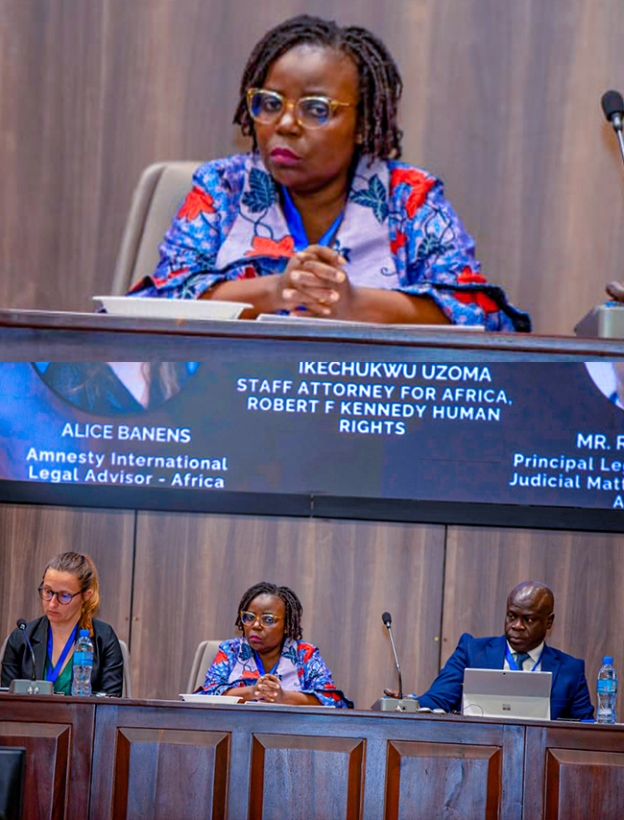
On the opening day of the platform, LHRC Executive Director, Dr. Anna Henga, delivered a high-level presentation on the contribution of the African Court to advancing human rights in Africa.
She spoke during a panel session on “The African Court’s Jurisprudence and its Impact on Human Rights Protection (Highlights and Landmark Cases),” where she reflected on how the Court’s landmark decisions have shaped national legal systems, strengthened regional human rights standards, and expanded access to justice for victims of human rights violations.
Two Decades of Progress in Accountability and Justice
Dr. Henga emphasized that over the past two decades, the African Court has played a transformative role in strengthening accountability, developing legal norms, and promoting the protection of fundamental rights across the continent.
She noted that the Court’s jurisprudence has contributed to legal reforms, constitutional interpretation, and the advancement of human rights protections in several African countries, positioning the Court as a key pillar of the regional human rights system.
Addressing Implementation Challenges and Tanzania’s Context
Dr. Henga also addressed persistent challenges in the implementation of the Court’s judgments, particularly in cases involving the United Republic of Tanzania. She observed that although the Court’s jurisprudence continues to advance human rights standards, enforcement of its decisions remains uneven, limiting the full realization of justice for affected individuals and communities.
She called for stronger collaboration between governments and human rights experts, as well as closer coordination with national, regional, and international institutions. She emphasized that effective implementation of the Court’s judgments requires political will, institutional accountability, and increased public awareness of regional human rights mechanisms.
Call to Restore Direct Access to the African Court
During the discussions, stakeholders underscored the importance of restoring direct access to the African Court for individuals and civil society organizations.
The Government of Tanzania has been urged to reconsider its 2019 decision to withdraw the declaration made under Article 34(6) of the Protocol to the African Charter, which had previously allowed individuals and civil society organizations to bring cases directly before the Court.
Participants highlighted that restoring this access would strengthen human rights protection, accountability, and international legal cooperation, while reaffirming Tanzania’s leadership in regional human rights diplomacy.
The African Court as a Catalyst for Human Rights Protection
Despite ongoing challenges, Dr. Henga highlighted that the African Court on Human and Peoples’ Rights remains a vital catalyst for promoting and protecting human rights in Tanzania and across Africa.
Established in 2004 following a 1998 resolution of the Organization of African Unity (now African Union), the Court has, over the past 20 years, strengthened regional legal standards, enhanced accountability, and provided important avenues for justice to victims of human rights violations.
Strengthening Regional Collaboration and Expertise
The panel brought together leading experts in African human rights law, including Prof. Frans Viljoen of the University of Pretoria, Alice Banens of Amnesty International, and Raymond Diouf from the African Court. Their contributions reflected a shared commitment to strengthening the effectiveness, accessibility, and impact of the African human rights system through collaboration, legal expertise, and sustained advocacy.
LHRC Reaffirms Its Leadership in Regional Human Rights Advocacy
LHRC’s participation in the platform reinforces its position as a leading institution in human rights advocacy, strategic litigation, and policy engagement in Tanzania and across Africa.
Through such engagements, LHRC continues to promote the rule of law, support the implementation of regional human rights decisions, and expand access to justice for vulnerable and marginalized communities.
As Africa reflects on two decades of the African Court, LHRC reaffirms its commitment to working with partners at national, regional, and international levels to ensure that human rights are respected, protected, and fully realized for all.

