DECISIONS OF THE AFRICAN COURT ON HUMAN AND PEOPLES’ RIGHTS ON ELECTORAL AND DEMOCRACY-RELATED CASES IN TANZANIA
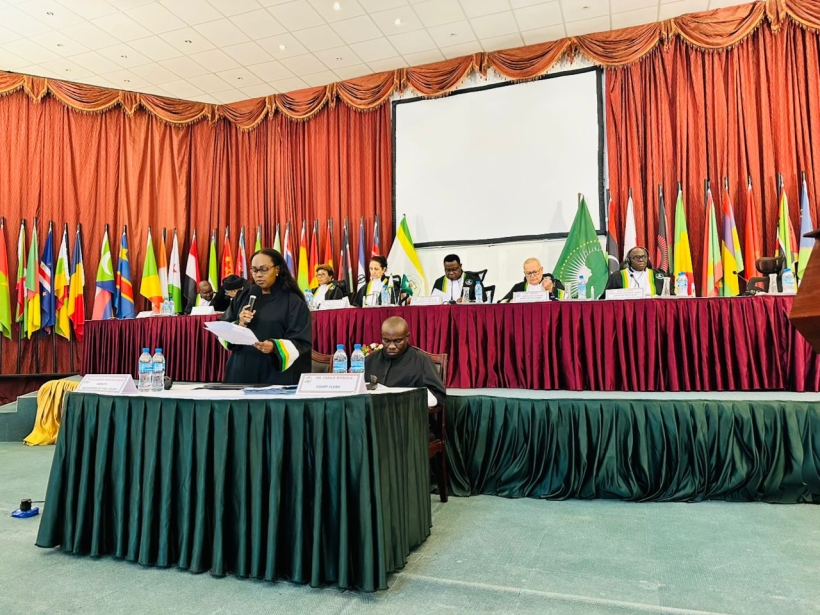
On 6 March, in Arusha, the African Court on Human and Peoples’ Rights delivered its decisions on several cases concerning elections and democracy in Tanzania during the Court’s 80th Ordinary Session.
The cases decided are as follows:
1. Application No. 040/2020 – Abdul Omary Nondo v. United Republic of Tanzania, together with Application No. 043/2020 – Deusdedit Valentine Rweyemamu and Paul Revacatus Kaunda v. United Republic of Tanzania.
2. Application No. 046/2020 – Ado Shaibu and Others v. United Republic of Tanzania.
3. Application No. 041/2020 – Legal and Human Rights Centre and Leberatus Mwangómbe v. United Republic of Tanzania.
Application No. 040/2020 and Application No. 043/2020
Abdul Omary Nondo v. United Republic of Tanzania and
Deusdedit Valentine Rweyemamu and Paul Revacatus Kaunda v. United Republic of Tanzania
The Court held that Article 74(12) of the Constitution of the United Republic of Tanzania, 1977, and Article 119(13) of the Constitution of Zanzibar, 1984, violate Articles 3(2) and 7(1)(a) of the African Charter on Human and Peoples’ Rights.
These provisions bar any court from exercising jurisdiction to examine any matter arising from actions taken by the electoral commissions—namely the National Electoral Commission of Tanzania (NEC) and the Zanzibar Electoral Commission (ZEC)—in the performance of their duties.
Orders issued by the Court
The Court ordered the United Republic of Tanzania to:
1. Amend its Constitution by repealing Article 74(12) of the Constitution of the United Republic of Tanzania, 1977 and Article 119(13) of the Constitution of Zanzibar, 1984.
2. Publish the Court’s judgment within three (3) months, in both Swahili and English, on the official websites of the Judiciary of Tanzania and the Ministry of Constitutional and Legal Affairs, where the judgment shall remain accessible for at least one year.
3. Submit a report on the implementation of the judgment within twelve (12) months, and thereafter every six (6) months, until the Court is satisfied that the judgment has been fully implemented.
Application No. 046/2020
Ado Shaibu and Others v. United Republic of Tanzania
The Court found that Article 41(7) of the Constitution of the United Republic of Tanzania, 1977 violates Articles 1 and 7(1) of the African Charter on Human and Peoples’ Rights.
The provision grants immunity from judicial scrutiny by preventing any court from hearing petitions challenging the election results of a candidate declared by the Electoral Commission as the winner of the Presidential election in Tanzania.
Orders issued by the Court
The Court ordered the United Republic of Tanzania to:
1. Amend its Constitution by repealing Article 41(7) within one year.
2. Publish the Court’s judgment within six (6) months, in both Swahili and English, on the websites of the Judiciary of Tanzania and the Ministry of Constitutional and Legal Affairs, where it shall remain accessible for at least one year.
3. Submit a report on the implementation of the judgment within six (6) months, and thereafter every six (6) months, until the Court is satisfied that the judgment has been implemented.
Application No. 041/2020
Legal and Human Rights Centre and Leberatus Mwangómbe v. United Republic of Tanzania
This case concerns restrictions contained in Article 5(2)(c) of the Constitution of the United Republic of Tanzania, 1977, and the former Election Act of 1985, which prohibit prisoners and Tanzanian citizens living abroad (diaspora) from participating in elections for the President, Members of Parliament, and Councillors.
The Government of Tanzania raised a preliminary objection, arguing that:
• The African Court lacks jurisdiction to hear the case; andThe applicants should have first filed the matter before domestic courts in Tanzania, in accordance with the Basic Rights and Duties Enforcement Act (BRADEA).
Court’s Decision:The Court ruled that:
• It has jurisdiction to hear the case and the preliminary objection regarding the mandatory use of BRADEA procedures was dismissed.
However, the Court emphasized that the applicants are required to exhaust domestic remedies, as the matter involves constitutional provisions of the State concerned.
The Court therefore reserved its jurisdiction to proceed with the substantive merits of the case at a later stage.
For more details on the Court’s decisions and the full analysis of the cases, please download and read the full press statement (PDF) available below.

